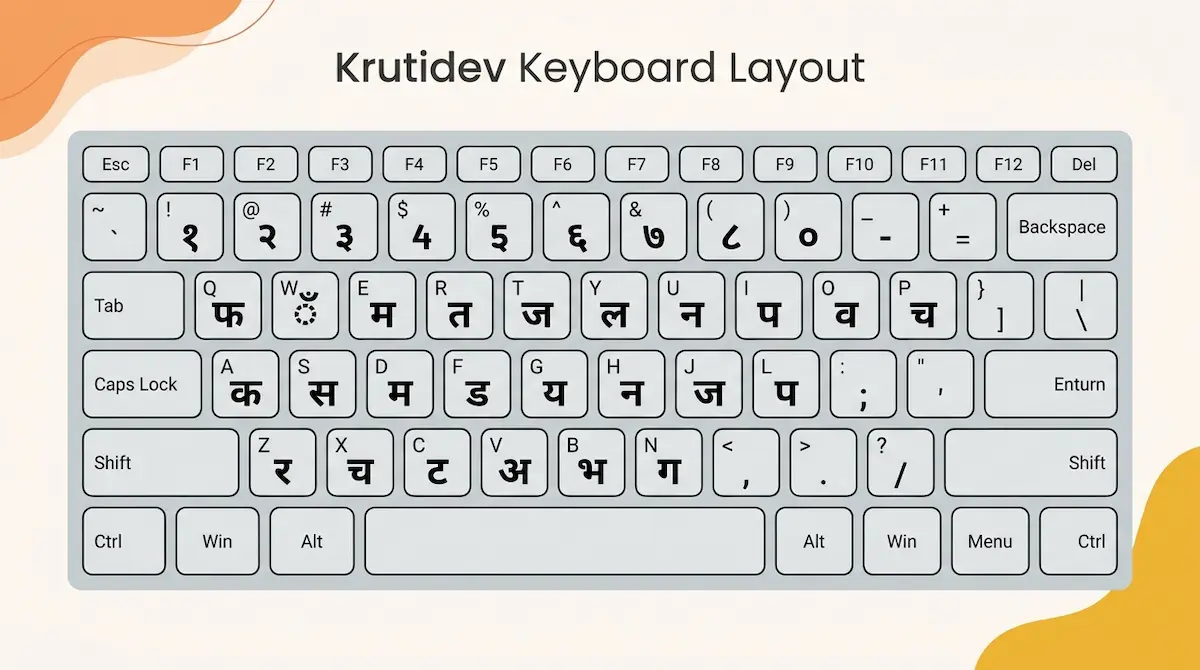
The Krutidev keyboard is not a phonetic Hindi layout. It follows the Remington typewriter mapping, the same finger pattern used on mechanical Hindi typewriters since the 1960s. If you have ever typed on a Godrej or Facit Hindi typewriter, your hands already know this keyboard.
Here you will learn how the layout is built — row by row, key by key — so you can read any Krutidev chart confidently and know exactly what is happening when you press a key.
What “Krutidev Layout” Actually Means
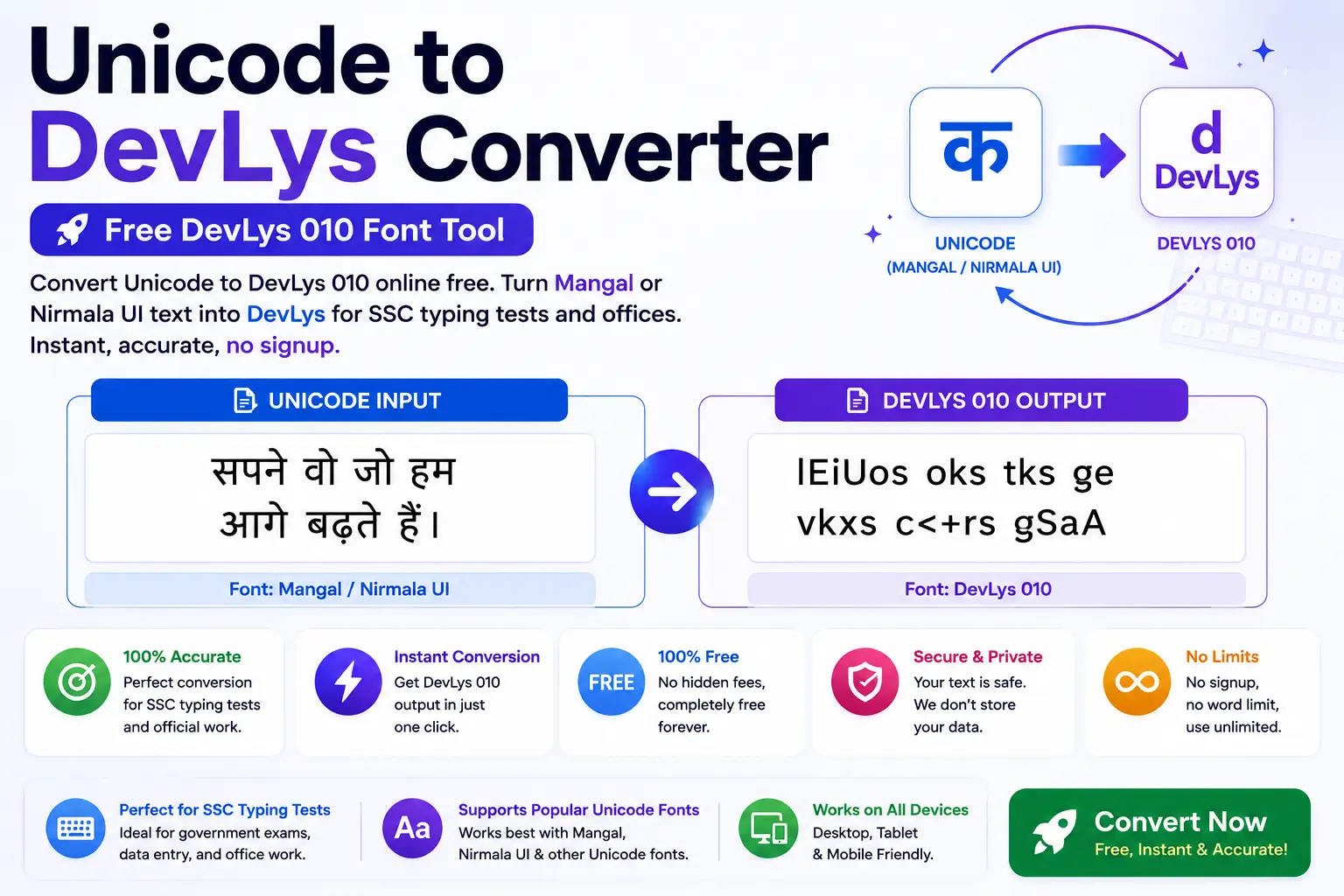
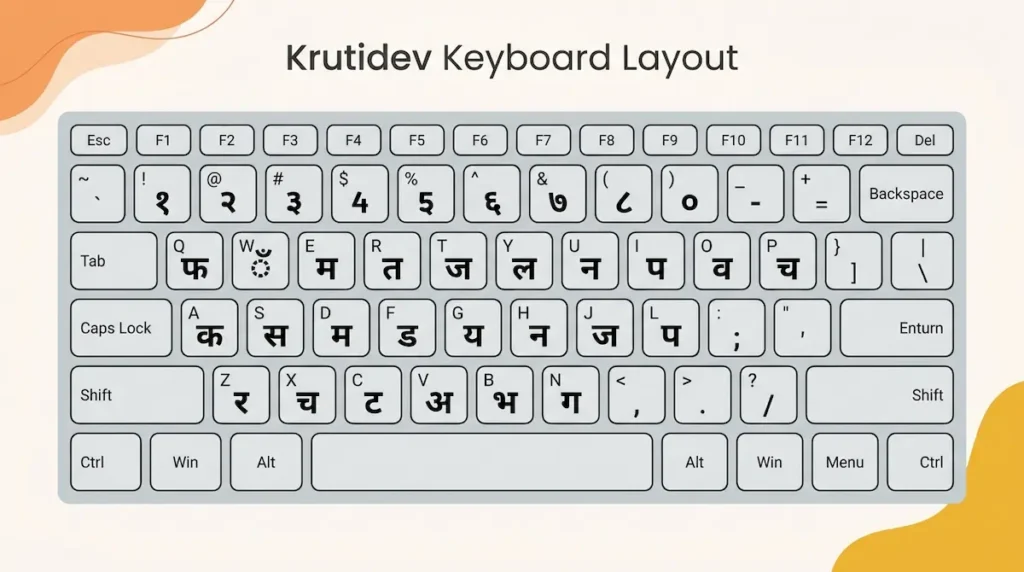
Krutidev 010, 011, 012, 016, 020, 040, 055 — the entire family shares one keyboard map. The font changes the visual style; the key positions stay identical. The same map is used by the Devlys font family. So learning this layout once covers every government typing test that specifies Remington Keyboard with Krutidev 010 / Devlys 010 font — SSC, UPSSSC, UPPRPB, RSSB, CPCT, CRPF, and most state PSCs.
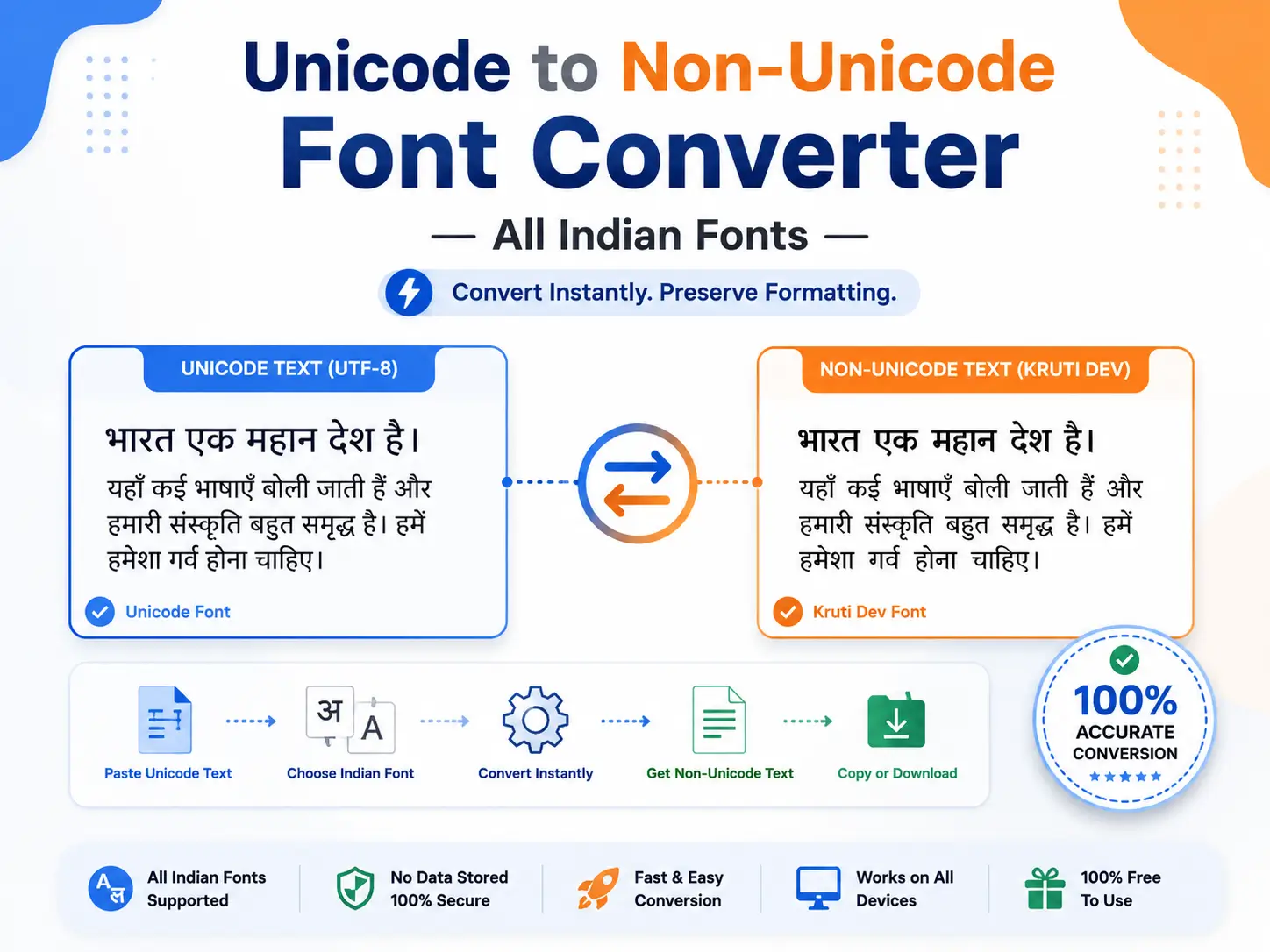
The trade-off: Krutidev is a non-Unicode legacy font. The keys produce ASCII characters that look like Hindi only when the Krutidev font is applied. Strip the font, and the text becomes English letters again.
How the Three Rows Are Organised
The Remington designers placed the most frequent Hindi characters under the strongest fingers. The pattern repeats across all four rows of the main typing area.
Home Row (A S D F G H J K L ; ‘)
The home row carries the highest-frequency consonants and matras. The index and middle fingers handle क, त, न, म, र — the consonants that appear most often in Hindi text. Vowel matras like ा, ि, ी sit on the left hand so they alternate naturally with consonants on the right.
Top Row (Q W E R T Y U I O P)
The top row holds medium-frequency consonants — ट, प, ध, च, ज, ब, ग, द — plus full vowels like ओ. Shift on this row gives you the aspirated pair (ट → ठ, च → छ, ज → झ pattern), which is the core logic of the entire layout.
Bottom Row (Z X C V B N M , . /)
The bottom row carries compound consonants and less frequent characters — ज्ञ, क्ष, य, ह, ख — along with the punctuation keys (। danda, comma, full stop). The X key alone produces two of the hardest conjuncts in Hindi: ज्ञ unshifted, क्ष shifted.
The Shift Logic — The Pattern Worth Memorising
Across most consonant keys, the shifted character is the aspirated or related variant of the unshifted one. This is the single most useful pattern in the layout:
- क → ख (unaspirated → aspirated)
- ट → ठ
- च → छ
- त → थ
- प → फ
Once this pattern clicks, you stop memorising individual keys and start typing by sound.
Characters Not on the Keyboard — Alt Codes
Not every Devanagari character fits on the main keys. Krutidev handles the rest through Alt + numeric keypad codes (you must use the right-side numeric pad, not the top row).
| Character | Function | Alt Code |
|---|---|---|
| र् | Reph (half Ra) | Alt + 0161 |
| ृ | Ru matra | Alt + 0170 |
| ं | Anuswar | Alt + 0216 |
| ँ | Chandrabindu | Alt + 0207 |
| ् | Halant / Virama | Alt + 0192 |
These five codes cover most real typing needs. The full set has roughly 40 codes for rare characters, numerals, and symbols.
Half-Letters and Conjuncts
Half-consonants are typed using the halant key (Alt + 0192) between two consonants. So क + halant + ष produces क्ष when properly composed. A few high-frequency conjuncts — क्ष, त्र, ज्ञ, श्र — get dedicated keys to save keystrokes during speed typing.
Where to Get the Verified Per-Key Chart
The exact character on every key is best read from a printed reference chart, not memorised from a webpage. Two sources publish the official Krutidev keyboard PDF that typing institutes use:
- IndiaTyping publishes the standard chart at indiatyping.com → Download → Hindi Keyboard Layout
- CDAC GIST (Government of India) hosts the original Remington mapping documentation
Print one, tape it above your monitor, and practise. Within two weeks of daily use, the chart becomes unnecessary.
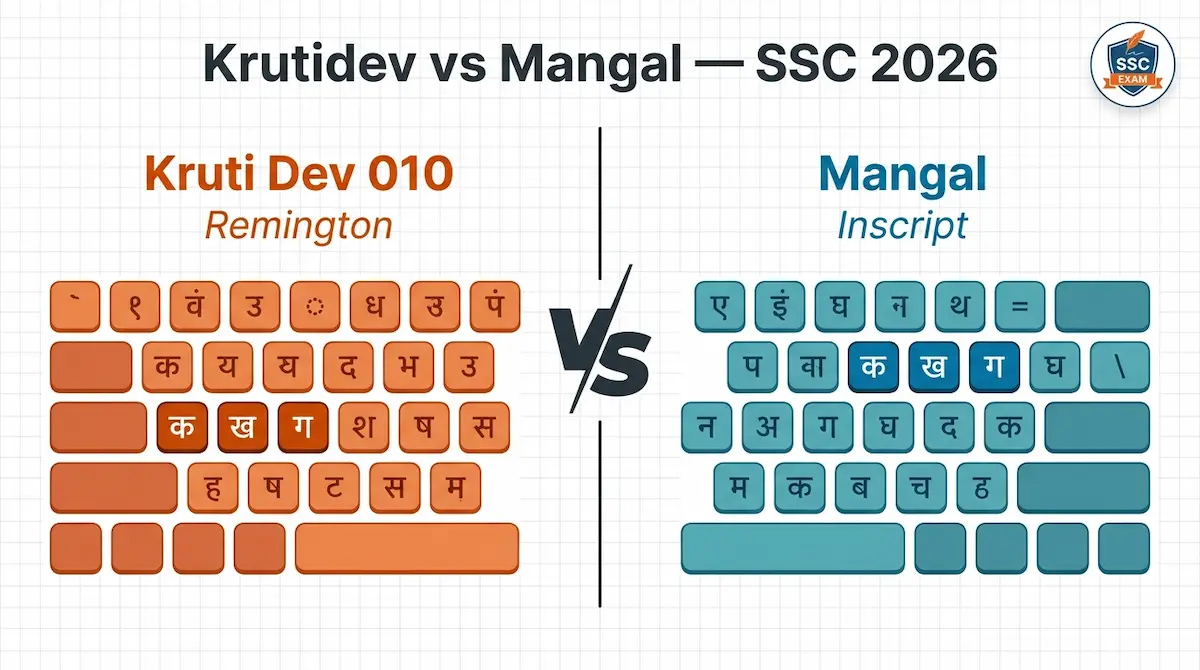
Read also Krutidev vs Mangal for SSC 2026 — Which One Wins?
What This Layout Gives You
The Remington-based Krutidev map is the fastest Hindi typing method in professional use today. Court stenographers, Rajbhasha typists, and data entry operators routinely cross 40 WPM on it. The same finger memory transfers directly to Mangal Remington Unicode — so nothing you learn here goes to waste.